Red light therapy isn't a trend. It's a mechanism.
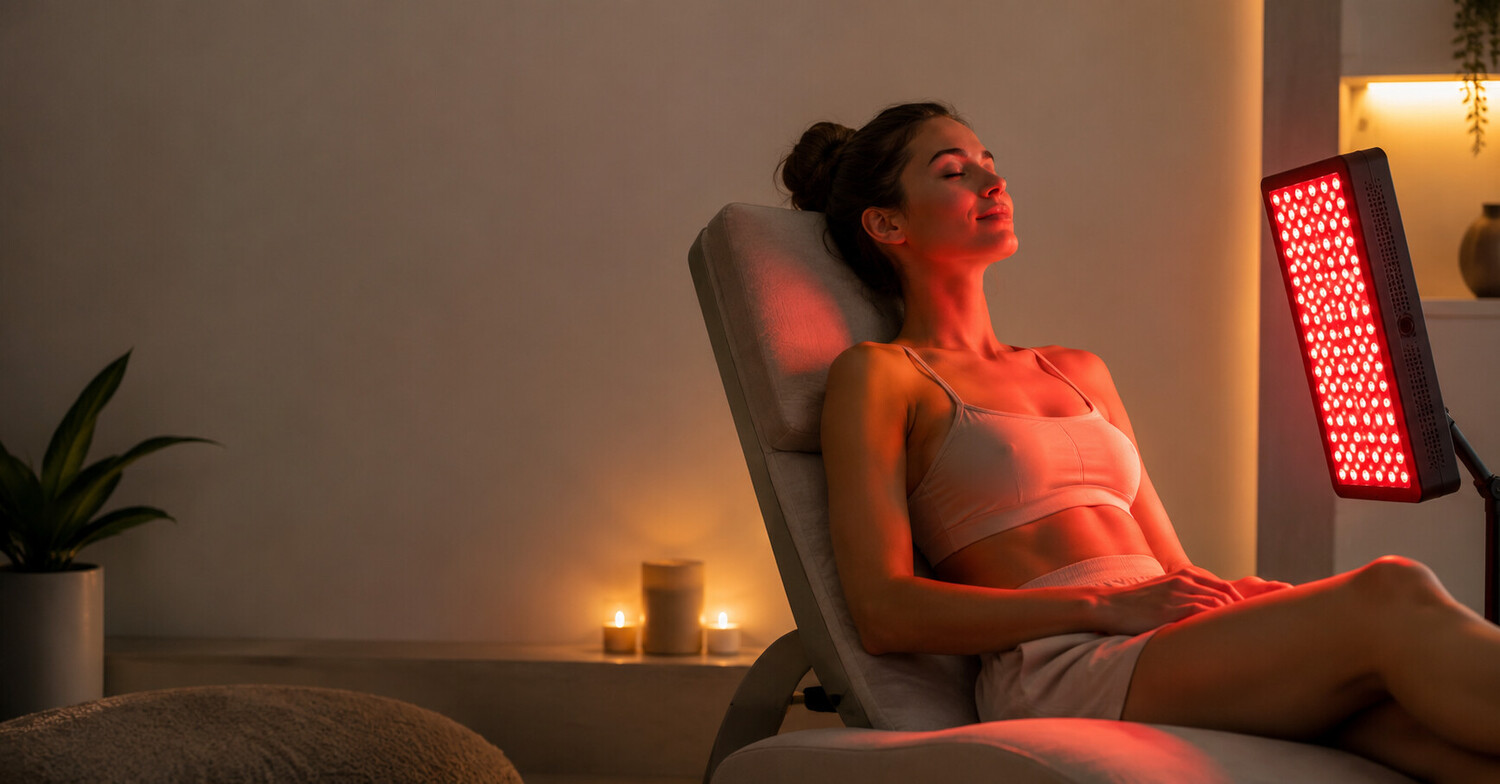
Your cells run on ATP, and the mitochondria that make it have a receptor called cytochrome c oxidase that happens to respond to specific wavelengths of red and near-infrared light, somewhere in the 630 to 850 nanometer range. Shine the right light on the right tissue, and you're feeding that receptor. More ATP. More cellular energy for repair, for inflammation control, for the stuff your body is already trying to do.
That's photobiomodulation. It's the actual science behind red light therapy, and it's not new. Researchers have been studying it since the 1960s. What's new is that the devices got small enough and cheap enough to sit in your living room instead of a lab.
What It's Actually Good For
I'm not going to tell you red light therapy cures everything. It doesn't. But the evidence for a few specific things is solid:
Skin health. Collagen production gets a boost, and a lot of people see real improvement in fine lines, tone, and healing time on minor wounds and blemishes.
Pain and inflammation. This is where the research is strongest. Joint pain, muscle recovery, general aches. It's not a replacement for medical care, but it's a legitimate tool for managing chronic discomfort.
Cellular recovery. Athletes use it. People recovering from injury use it. The mechanism supports faster tissue repair because you're literally giving the cells more energy to work with.
Where I'd tell you to slow down is anything that sounds like a miracle. Weight loss claims, "detox" claims, cure-all claims. Photobiomodulation is real and well-documented for what it does. It's not magic, and anyone selling it that way is overselling it.
And Yes, It Works on Your Fur Babies Too
This one surprises people, but it shouldn't. Mitochondria don't know what species they're in.
The clearest data I've seen is on osteoarthritis in dogs. One study found dogs treated with red light therapy cut their NSAID needs in half, compared to zero improvement in the control group. Wound healing showed similar results. Full-thickness wounds closing in a fraction of the usual time.
If you've got an older dog stiff in the mornings, or one recovering from surgery, this is worth a real look. I'll say the same thing here I said above. The studies are promising but still small, and we need bigger trials before anyone should call it settled science. What we do know is it's remarkably safe. Keep it out of the eyes, skip it on active tumors, and there's not much else to worry about.
Where I Send People
I don't sell red light devices at Shiloh, but I get asked about them often enough that I went looking for a company I'd actually stand behind. Red Therapy Systems makes the devices I point people toward, for people and for pets. Face masks, body wraps, full mats, and a full line built specifically for dogs and cats.
I'm an affiliate, so I'll say that plainly. If you buy through my link, I get something back, and you get a discount with the code SHILOH15.
Start with what you're actually trying to solve. Joint pain, skin, recovery, or your dog's stiff hips. The mechanism is the same either way. Feed the mitochondria, give the body room to do what it already knows how to do.
This post contains an affiliate link. I only recommend products I'd use myself or in my own practice.

kimberly Kubitza
Contact Me.jpg)