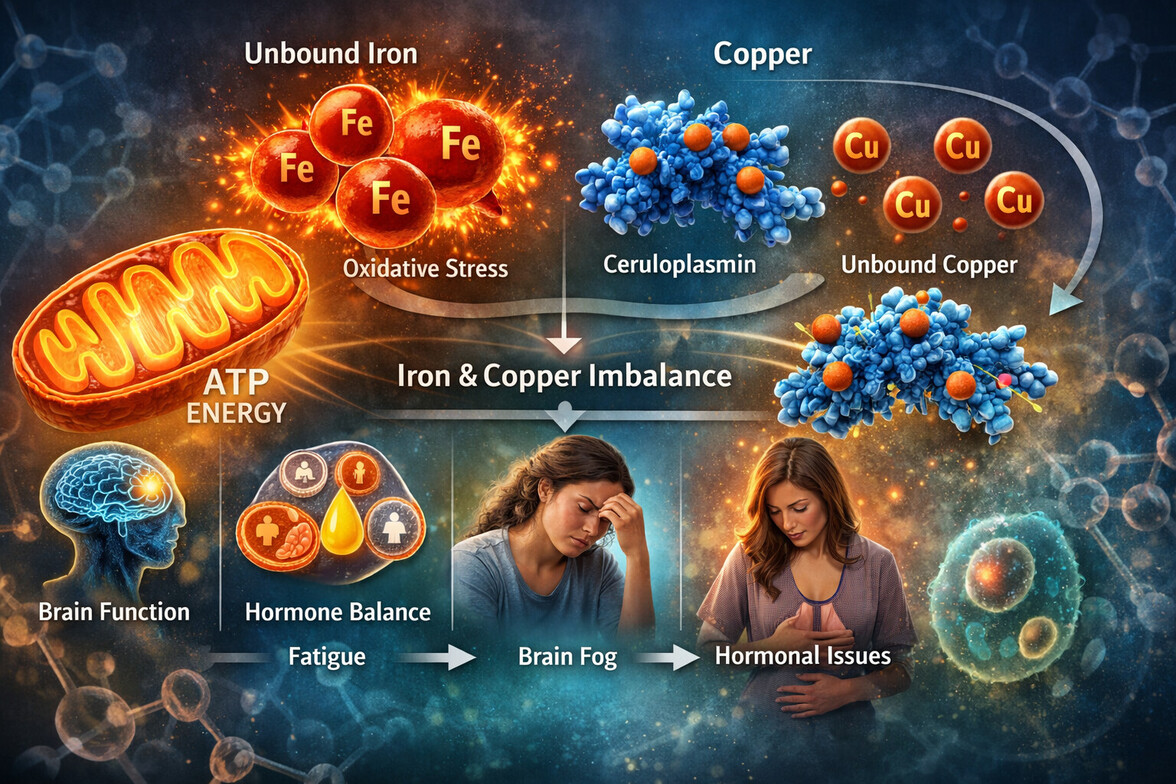
Mitochondrial Dysfunction, Iron Overload, Copper
Imbalance, and Ceruloplasmin
How Unbound Iron and Un-Metabolized Copper Affect Energy, Hormones, and Cellular Health
Many chronic health symptoms are not caused by a single organ problem but by dysfunction at the cellular level. When the body cannot properly produce energy, regulate minerals, or transport oxygen, symptoms can appear throughout the entire system.
Some of the most overlooked factors in cellular health are mitochondrial function, iron regulation, copper metabolism, ceruloplasmin activity, and the presence of un-metabolized copper. When these systems are out of balance, the body may experience fatigue, brain fog, anxiety, hormone imbalance, inflammation, and poor recovery even when routine lab tests appear normal.
Understanding how these systems work together helps explain why many people struggle with long-term symptoms that do not respond to simple treatments.
What Mitochondria Do and Why They Matter
Mitochondria are responsible for producing ATP, the energy used by every cell in the body. Organs with high energy demand such as the brain, muscles, liver, and endocrine glands depend heavily on proper mitochondrial function.
When mitochondria are working correctly, the body can
- produce energy efficiently,
- handle toxins more effectively,
- recover from stress,
- maintain hormone balance,
- and support immune function
When mitochondrial function is reduced, the body may shift into a survival state where energy production slows and repair processes become weaker. This can lead to fatigue, poor stamina, sensitivity to stress, and difficulty healing.
One of the most common causes of mitochondrial stress is improper iron and copper metabolism.
Iron Overload, Unbound Iron, and Oxidative Stress
Iron is essential for oxygen transport and energy production, but iron must be tightly regulated. The body cannot safely use free iron. Iron must be bound to proteins such as transferrin and ferritin so it can be transported without causing damage.
When iron is not properly bound, it becomes reactive. Unbound iron can increase oxidative stress, irritate tissues, and damage mitochondria. Instead of helping the body produce energy, excess free iron can interfere with cellular metabolism.
Many people are told they are low in iron, yet the real problem may be that iron is present but not being used correctly. This often happens when copper metabolism and ceruloplasmin function are impaired.
Copper Metabolism and Why Copper Alone Is Not the Problem
Copper is required for many enzymes involved in energy production, nervous system function, hormone balance, and immune regulation. Copper also plays a key role in iron metabolism and mitochondrial activity.
However, copper must be properly bound and activated to be beneficial. When copper is not handled correctly, it may accumulate in a reactive form rather than being used by the body.
This condition is often called un-metabolized copper or free copper, meaning copper is present but not properly attached to ceruloplasmin, the protein that allows copper to function safely.
In this state, copper can act as a pro-oxidant and contribute to inflammation, nervous system stress, and poor energy production.
Ceruloplasmin: The Key Protein That Regulates Copper and Iron
Ceruloplasmin is a copper-dependent protein produced in the liver. It binds most circulating copper and helps convert iron into the form needed for transport in the bloodstream.
Ceruloplasmin allows iron to leave storage, bind to transferrin, and reach the tissues where it is needed. If ceruloplasmin is low or not functioning correctly, iron may become trapped in storage while copper remains unbound.
This can create a pattern where lab tests look normal, but the body still shows signs of low oxygen delivery, fatigue, and metabolic stress.
What Is Un-Metabolized Copper
Un-metabolized copper refers to copper that is not properly bound to ceruloplasmin and remains in a reactive form in the body. This can happen when ceruloplasmin production is low, when retinol intake is insufficient, when the liver is stressed, or when mineral balance is disrupted.
Common contributors may include
- low ceruloplasmin,
- low retinol,
- zinc imbalance,
- chronic inflammation,
- hormonal stress,
- or liver dysfunction
When copper is not metabolized correctly, it can increase oxidative stress, interfere with iron regulation, disrupt neurotransmitters, and reduce mitochondrial energy production.
How Retinol, Ceruloplasmin, Copper, and Iron Work Together
These systems operate in a specific sequence inside the body.
Retinol supports ceruloplasmin production.
Ceruloplasmin binds and activates copper.
Activated copper allows iron to be mobilized.
Proper iron use allows oxygen delivery.
Oxygen delivery allows mitochondria to produce energy.
If any part of this chain breaks down, the result may be
- functional iron deficiency,
- free copper accumulation,
- low cellular energy,
- and increased oxidative stress
This explains why symptoms such as fatigue, anxiety, hormone imbalance, and brain fog often appear together.
Symptoms Linked to Unbound Iron and Un-Metabolized Copper
When mineral regulation and mitochondrial function are impaired, symptoms may affect multiple systems.
Possible neurological symptoms include anxiety, irritability, racing thoughts, and poor stress tolerance.
Hormonal symptoms may include menstrual irregularities, estrogen dominance patterns, and thyroid slowdown.
Metabolic symptoms may include fatigue, low stamina, and unstable blood sugar.
Inflammatory symptoms may include frequent illness, histamine reactions, and joint discomfort.
These patterns can occur even when standard lab tests do not show clear abnormalities.
*** Why This Matters for Cellular Energy and Recovery ***
Mitochondria require properly regulated iron, copper, and oxygen to produce energy.
If iron cannot be used, oxygen delivery drops.
If copper is not bound, key enzymes cannot function.
If ceruloplasmin is low, both iron and copper regulation are affected.
The result may be reduced ATP production, slower recovery, and increased sensitivity to stress.
Supporting cellular metabolism often requires restoring proper mineral handling rather than simply adding more supplements.
Learn More
Ceruloplasmin Article/Video
https://www.azurelivingwell.com/post/podcast1-ceruloplasmin
Kimberly Kubitza
Contact Me
.jpg)